For a long time “Chinese running shoes” meant knockoffs — a cheap imitation of something better. That reading is now badly out of date. Li-Ning, Anta, Xtep and 361° now build carbon-plated racers that World Athletics approves for competition, using the same foam chemistry as the Western flagships, and independent reviewers rate them highly. Whether one is right for you mostly comes down to your feet.
A quick note: KISH will soon sell the six shoes we look at in detail below. We’ve written this the way we write everything in the Lab — to be useful to you, whatever you end up buying and wherever you buy it.
Who’s who.
Who’s actually who
Li-Ning is the best known outside China, and its Feidian line is the racing flagship, with the Red Hare series covering daily training. Anta has grown into one of the largest sportswear companies in the world; its racers are the C10 Pro and the C202. Xtep is the specialist: its 160X is the racing shoe and the 2000KM line the trainers, and it dominates Chinese distance running — by its own count it sponsored 44 marathons and other running events across China in 2024, and at that year’s Shanghai Marathon nearly 20% of the sub-three-hour finishers were wearing its shoes. 361° has built the Flame racing series and a reputation for solid trainers. Behind the big four, Erke and Qiaodan — both far less known outside China — also have racers on the approved list below. Qiaodan now trades as Zhongqiao Sports, and has no connection to Nike’s Jordan brand. Newer names are breaking through too: Dynafish, a road-running brand from Tianjin, launched its Xiaonian trainer in October 2025, and within a year RTINGS and The Run Testers were reviewing it.
What changed is not marketing. China’s own running boom created a domestic market competitive enough, with good enough athletes to chase, that these brands had to get good, quickly.
What the reviewers say.
We gathered what independent reviewers and shoe bloggers say about six Chinese shoes. We read English-language reviews first, and Chinese ones where the English coverage was thin. Four of the six come out well, mostly for their ride and their value. The other two, Qiaodan’s Leili 2.0 MAX and Xtep’s 2000KM 5.0 Pro, get a more mixed reception: each suits some runners far better than others. The caveats are about fit, feel and who each shoe suits, rather than build quality.
Red Hare 9 Ultra
The long-run cruiser
Reviews well
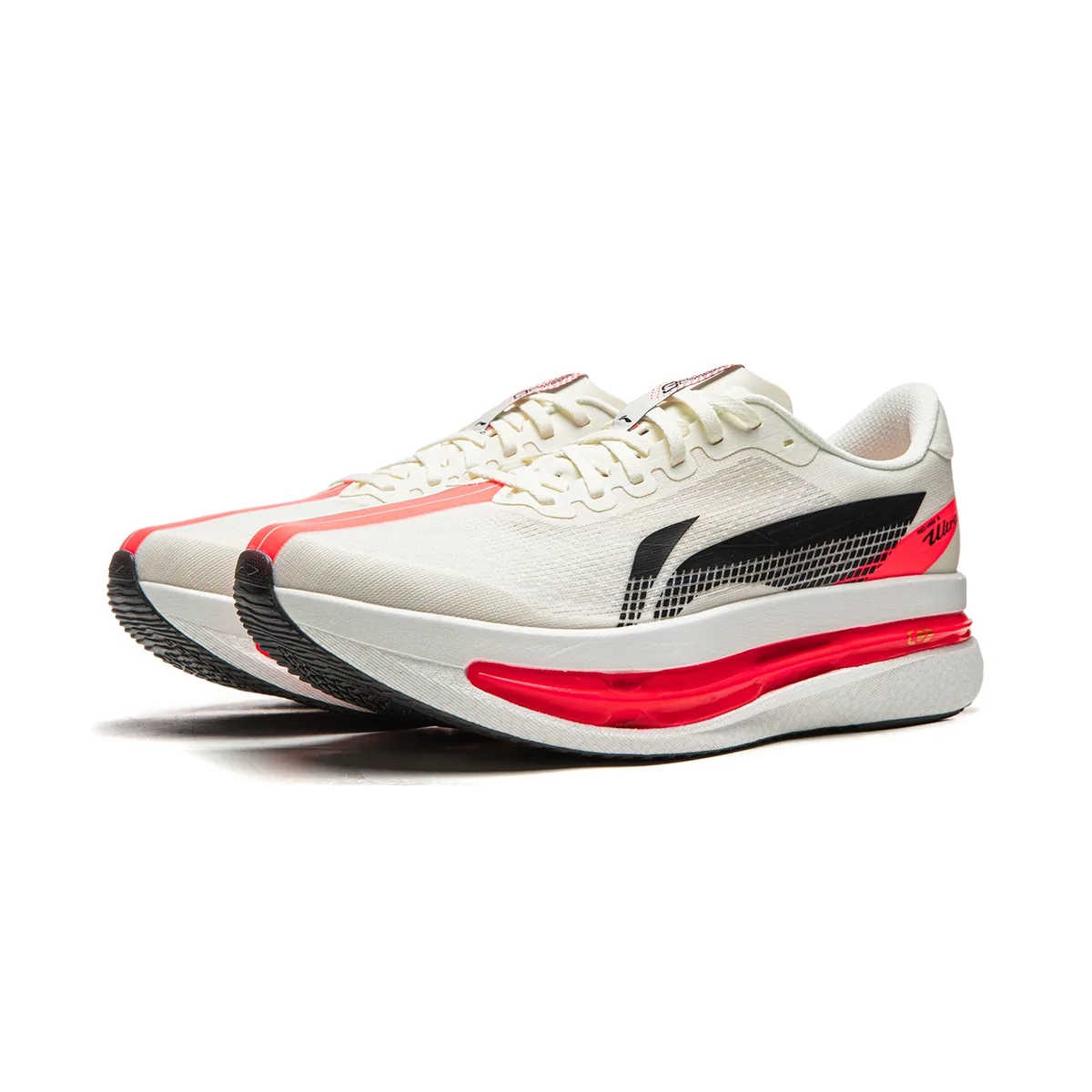
The long-run cruiser.
Li-Ning’s maximum-cushion trainer. Three layers of foam, with PEBA-based Super Boom on top, and no carbon plate. Testers weighed it at 232–246g in men’s sizes from UK 8 to US 9½.
What reviewers say- RTINGS’ lab testing rated its cushioning on long runs outstanding, and scored it 8 out of 10 for the marathon.
- After 80km, The Run Testers called it one of the year’s standout shoes for anything from easy runs to marathon pace, and very good value.
- It’s WeeViews’ favourite for medium and long runs.
Xiaonian
The lightweight all-rounder
Reviews well
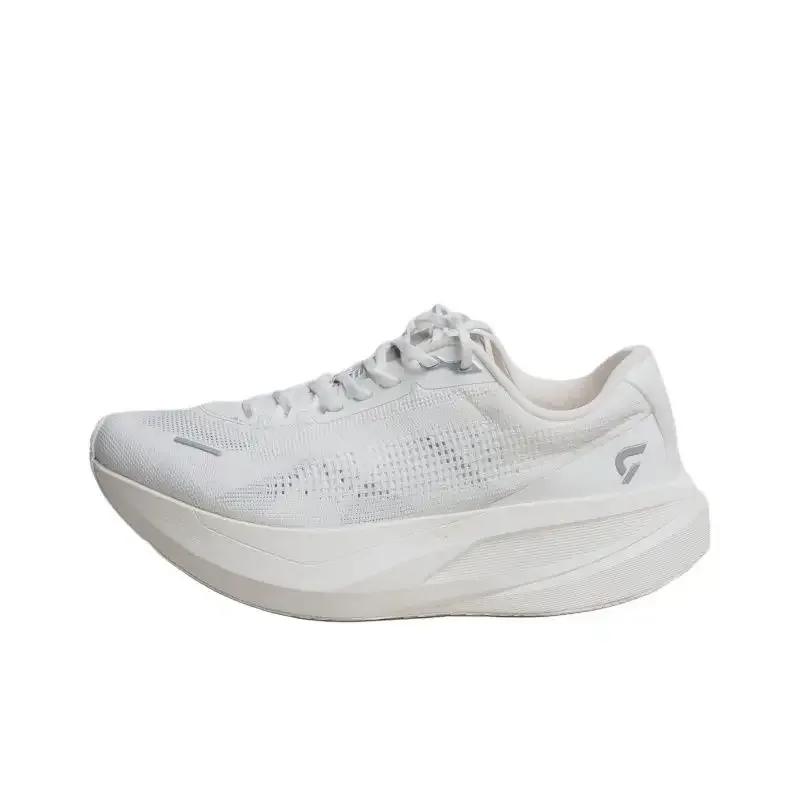
The lightweight all-rounder.
a tall, unplated trainer from Tianjin’s Dynafish. The name means “little catfish”. It weighs only about 190g in a US 9.
What reviewers say- RTINGS scored it 8.4 out of 10 for the marathon and 8.1 for daily training, and found it lighter and steadier than the Red Hare 9 Ultra.
- The Run Testers called it outstanding value, and Tom’s Guide found no wear on it after 60 miles.
- WeeViews said it lives up to the hype after 100 miles.
- Spain’s Foroatletismo gave it 8 out of 10 and called it a contender for shoe of the year.
Leili 2.0
Soft, bouncy and great value
Reviews well
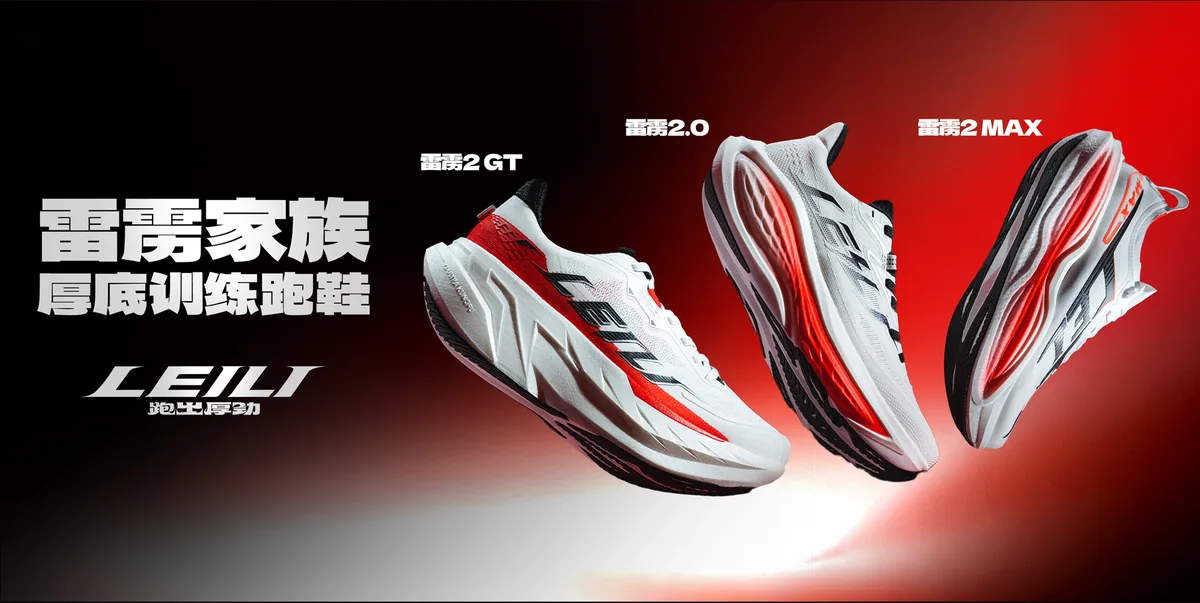
Soft, bouncy and great value.
a soft, high-cushion daily trainer, on sale in China since July 2026. It has a PEBA-blend foam and no plate, and weighs about 225g in a UK 8.
What reviewers say- The Run Testers called it “an enjoyable, great value cushioned daily trainer”.
- Several YouTube reviewers rate it alongside far pricier trainers; one prefers it to the ASICS Superblast 3.
- Reviewers find it light for the amount of foam, and they rate its upper a clear improvement on the first version’s.
Leili 2.0 MAX
The firm one, for heavier runners
Mixed reviews
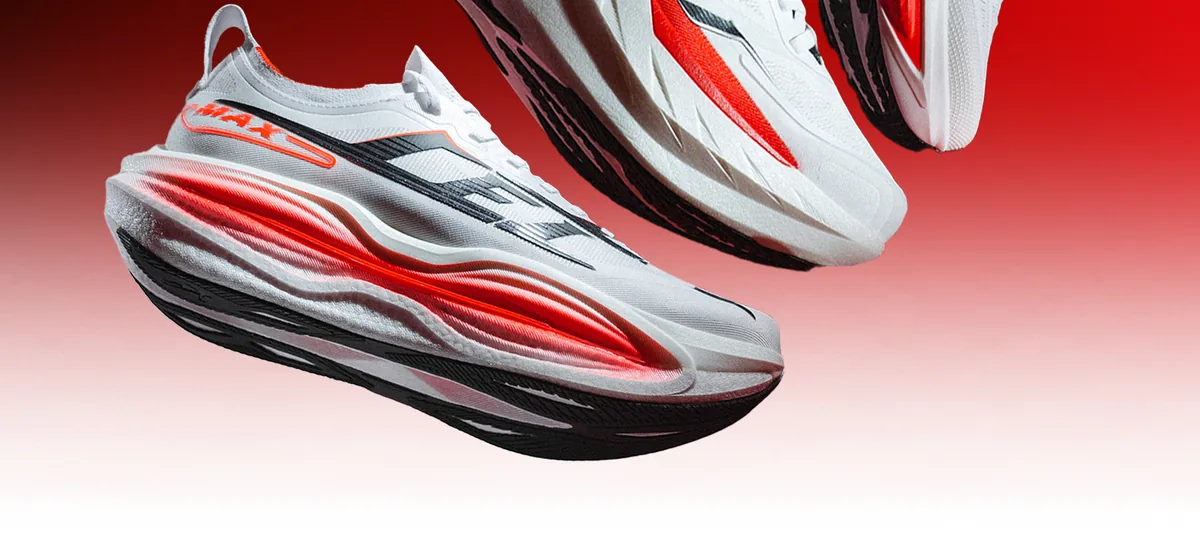
The firm one, for heavier runners.
the heaviest member of the Leili 2.0 family, and the only one with a plate — sold abroad as the “TG 2.0 MAX”. It has two foams, a PEBA blend and a beaded TPU foam, and a full-length nylon plate rather than carbon. Testers weighed it at 244–293g, from US 7 to US 11, and measured about 40mm of foam under the heel. Despite the shared name, it’s close to the opposite of the soft Leili 2.0 above.
What reviewers sayit divides opinion, largely by body weight. Almost every review so far is based on a first run, so treat the verdicts as early.
- Of about ten reviewers gathered by Runner’s Verdict, seven of eight called it firm and seven of eight called it stable.
- One YouTube tester’s first-run verdict: a winner for heavier runners, uninspiring for lighter ones. Another found it gave good protection to heavy or powerful runners, though the upper runs hot.
- A Chinese reviewer rated it good enough for a marathon, and good value.
- Others were lukewarm: firm and slappy at slow paces, or simply not a shoe for their own rotation.
2000KM 5.0 Pro
The no-nonsense daily trainer
Mixed reviews
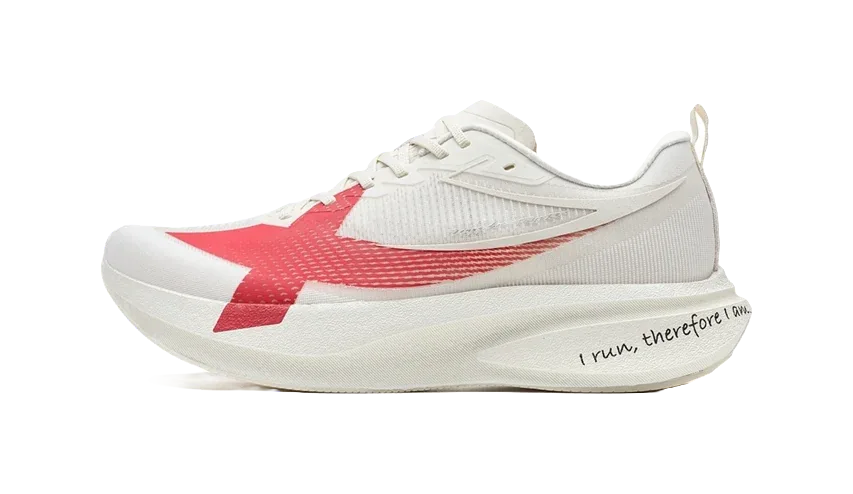
The no-nonsense daily trainer.
Xtep’s plate-free trainer for daily miles and long runs, from a line it sells on durability and a hard-wearing outsole. It has full-length ACE foam and only a small support piece under the midfoot. Testers weighed it at 237g in a men’s 28cm and about 264g in a US 12. Several Xtep shoes have similar names, including a newer 5.5 Pro; the reviews here are of the 5.0 Pro.
What reviewers sayEnglish-language reviewers like it; Chinese ones are split.
- WeeViews gave it 5 out of 5 after about 100km, calling it a cushioned tempo cruiser at a great price.
- A Taiwanese ultrarunner with 78 marathons behind him plans to race marathons and ultras in it.
- About three-quarters of Reddit comments about it are positive.
- Several Chinese video reviewers are less keen: one says it starts to dig into the foot after 2km, another advises against buying it, and another warns heavier runners off it.
Feidian 5 Challenger
A carbon-plated bargain
Reviews well
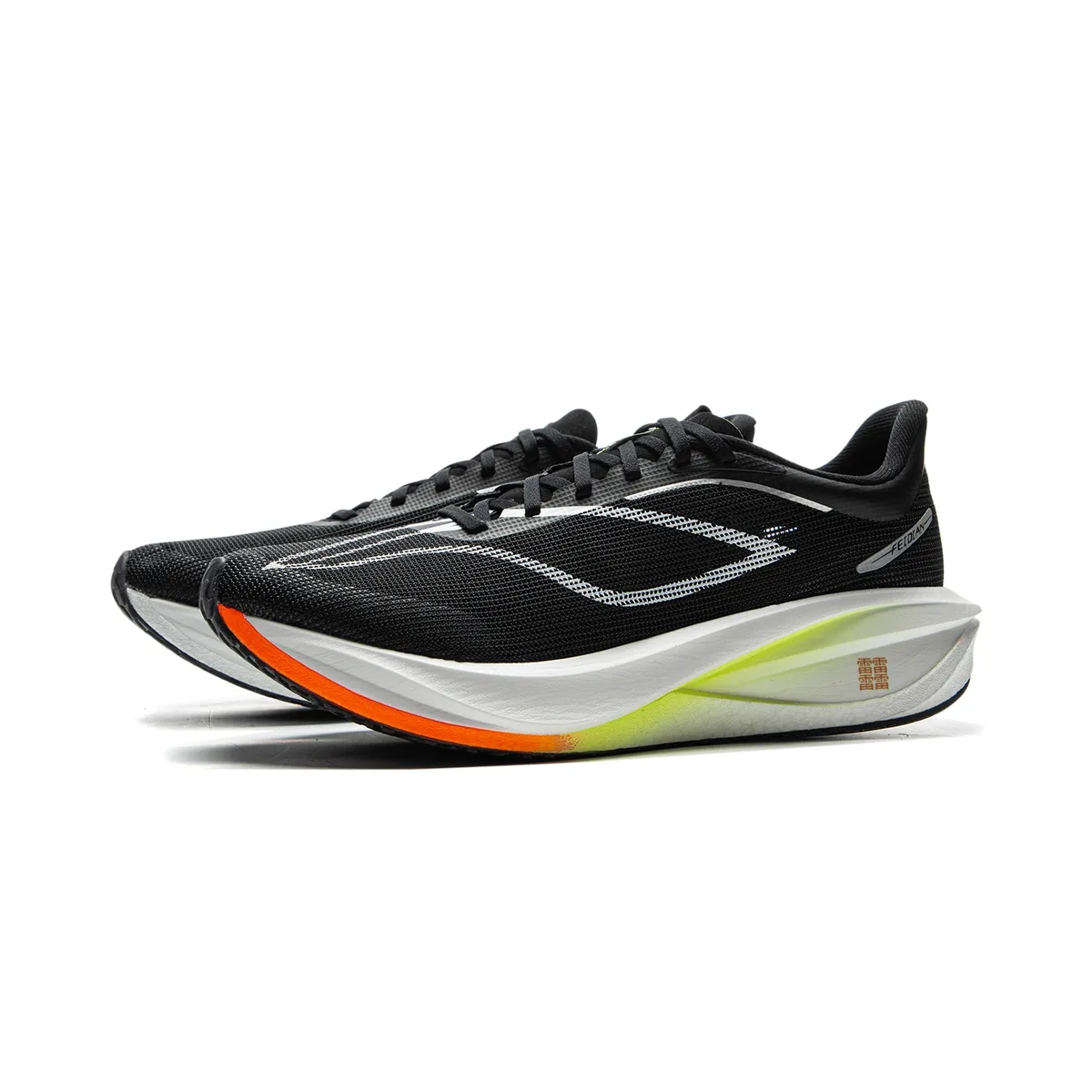
A carbon-plated bargain.
the entry-level shoe in Li-Ning’s Feidian 5 racing range. It has a carbon plate under Super Boom and Boom foam, and Li-Ning puts it under 200g in a US 8½. World Athletics approves it for road racing.
What reviewers saythey keep coming back to value.
- After 100 miles, The FOD Runner called it “an absolute no-brainer”, and preferred it to the ASICS Metaspeed Sky Tokyo.
- Another YouTube tester called it “probably the best speed trainer on the market”.
- A summary of 60 Reddit comments came out 95% positive.
- Testers also praise its light weight and a soft, bouncy ride that works from easy runs to threshold pace.
Approved, and the same science.
The credibility test that isn’t marketing
Brands will tell you anything. The useful check is the World Athletics approved footwear list — the register of shoes permitted in sanctioned competition, checked against the stack-height and plate rules the elites race under.
World Athletics now keeps it as a live online list rather than dated editions. On 15 October 2026 it included 20 versions of the Xtep 160X, 11 Li-Ning Feidians (the Feidian 5 Challenger among them), models from 361°’s Flame and Furious lines, and three versions of Anta’s C10 Pro and seven of its C202. That is the sport’s governing body confirming these are legitimate competition shoes, not a brand claiming it. Version numbers move fast in this corner of the market, so check the current list for the specific model rather than trusting a review from two seasons ago.
The technology is the same technology
This is the part that surprises people. These are not cheaper shoes because they use cheaper ideas — they use the same two ingredients we unpacked in our guide to running shoe foam: a supercritical or nitrogen-infused PEBA-based foam, and a carbon plate.
Li-Ning’s Super Boom midsole is PEBA-based (the brand quotes up to 89% energy return — that’s their figure, not an independent one). Anta uses a nitrogen-infused foam it calls Nitroedge. Xtep pairs PEBA with a carbon plate reinforced with polyimide fibres, which it says makes the plate tougher. Weight varies by model: the 2022 Xtep 160X 3.0 came in around 210g in a men’s US 9, and RTINGS found the 160X 7.0 Pro, at about 227g, heavier than other dedicated racers. Some of the newest shoes are notably light, though: the Dynafish Xiaonian weighs about 190g, and Li-Ning puts the Feidian 5 Challenger under 200g.
One myth worth killing, because it gets repeated constantly: “they’re made in the same factories as Nike.” Not really. Nike’s latest annual report puts roughly 52% of its footwear in Vietnam and 27% in Indonesia, with only about 16% in China — the few per cent left over come from the rest of its 95 footwear factories, spread across 11 countries. What is shared is the industry — the same handful of enormous contract manufacturers, the same materials supply chain, the same engineering talent pool. That’s a real point. “Same production line” isn’t.
About a third less.
What you pay
In the brands’ US stores on 15 October 2026, the mainstream Chinese racers listed at US$169–240 — the 361° Flame 5 at $169, the Anta C202 5 GT at $240 — against US$255–295 for the Western flagships (adidas Adios Pro 4, Nike Vaporfly 4, ASICS Metaspeed Sky Tokyo, Nike Alphafly 3). That’s anything from about 6% to over 40% less at list price, and on the street the gap can be far bigger: in June 2026, with coupons, Li-Ning’s own AliExpress store sold the carbon-plated Feidian 5 Challenger for US$74.49. The very top of the range is the exception: Li-Ning’s Feidian 3 Ultra launched in China at ¥2,299, about US$335.
What you give up is hard to pin down. Nobody has raced these head to head against the Western flagships in a lab, so treat any percentage you see quoted with caution. What the reviews do show is that the ride holds its own:
- RTINGS scored the Dynafish Xiaonian 8.4 out of 10 for the marathon.
- One YouTube tester preferred the Feidian 5 Challenger to the ASICS Metaspeed Sky Tokyo, a racer that costs far more.
For most runners, fit will matter more than any small difference in the foam.
List prices read on 15 October 2026. Bars run from the lowest to the highest list price in each group.
Fit comes first.
What to watch for
The honest list is shorter than the stereotype. Fit is the big one: most of the racers are narrow through the midfoot and arch, which rules some feet out (more below). Weight varies more than the marketing suggests, as above. Stability differs a lot by model, too — Doctors of Running went as far as calling 361°’s Flame 5 possibly the only truly stable racing shoe on the market, while it found the Anta C202’s rearfoot a little clunky until it broke in. And the model lines iterate quickly — the Xtep 160X has gone from version 3.0 to 8.0 since 2022 — so a glowing review can be describing a shoe several versions old.
On wear, the early signs are mostly good. Reviewers reported little outsole wear on:
- the Feidian 5 Challenger at 100 miles
- the Red Hare 9 Ultra at 63 miles
- the Dynafish Xiaonian at 60 miles
- the Xtep 2000KM 5.0 Pro at about 100km
A few testers have doubts about how long the softest foams and outsoles will last, and nobody has published long-term data yet, so treat any lifespan claim, in either direction, with caution — and judge the foam rather than the label, as we set out in how long running shoes last.
Getting the fit right
You’ll often read that these shoes run narrow because they’re built for Asian feet. The data points the other way: an analysis of 1.2 million 3D foot scans found Asian men’s feet wider than European or North American men’s at every length. What reviewers actually report is model by model — most of the racers run true to length but narrow through the midfoot and arch, often with a roomier toe box, and some Anta models run a little short.
So don’t convert from your US size. Brands convert between size systems differently, so the most reliable number is the length. Take the CM or JP number printed on the tongue label of whichever shoe currently fits you best, and buy to that. If you’re between sizes, or your feet are wide through the middle, go up — and if a racer still pinches at the arch, that’s a legitimate reason to walk away.
If you’re buying for a teenager
Teens in adult sizes can wear these, and a narrow midfoot can suit a slim teenage foot. Two cautions carry over from our own work, though.
First, a carbon-plated racing shoe is not a training shoe for a growing athlete. As we set out in our piece on super shoes for children, the line most sports podiatrists draw is the mid-teens, and even then for race day only — and that doesn’t change because the shoe is cheaper. The everyday trainers in these ranges make far more sense for a teenager than the racers do. Of the six above, that means the trainers rather than the Feidian 5 Challenger. That’s worth saying because in China the Challenger is marketed to school pupils. Second, a narrow racer is the wrong direction for a wide-footed teen; fit still outranks everything else — and the Xtep 2000KM 5.0 Pro, roomier than most, is worth a look for a teenager with wider feet. For a teen who needs stability, reviewers found the Xiaonian steadier than the softer Red Hare 9 Ultra and Leili 2.0. The firm Leili 2.0 MAX is the exception the other way: reviewers say it suits heavier runners, so it’s unlikely to suit a light teenager.
Buying them, and the counterfeit question
Most of these shoes are still hard to buy here. As of October 2026, none of the big Chinese platforms ships direct to the UAE — POIZON’s English-language app delivers only to the US, and Dewu’s and Taobao’s direct shipping covers other markets — so buyers here go through purchasing agents or forwarders, and returns from abroad are slow and expensive. Some of it can be ordered from the brands: 361°’s global online store ships its Flame racing shoes to the UAE, though its UAE store doesn’t stock them. Li-Ning’s UAE store currently sells badminton shoes rather than running. KISH will soon sell the six above in Dubai too.
Counterfeits are real, and they concentrate exactly where you’d expect: the hyped racing models. Li-Ning runs an official anti-counterfeit system — scan the QR code on the shoe or packaging and verify it against their checker. Beyond that, the tells are the usual ones: poorly printed or badly stitched labels, misspellings or inconsistent fonts, fraying mesh, visible glue, an inconsistent sole pattern, or a colourway that doesn’t match the official images. Platforms that authenticate before shipping are materially safer than open marketplaces, and second-hand listings of hyped racers are where the risk concentrates.
So buy from a seller you can go back to, and check the QR code on any Li-Ning pair.
The bottom line
These are not budget knockoffs. Several are World Athletics-approved racing shoes built on the same foam-and-plate technology as the Western flagships, from companies big enough to sponsor whole marathon calendars. Of the six we looked at in detail, four review well for their ride and their value, and the other two suit particular runners: the Xtep wider feet and steady miles, the Leili 2.0 MAX heavier runners. The trade-offs are a narrower midfoot on many models and a fast-moving model line, against a price that’s usually lower at list, and sometimes far lower on the street.
Judge them the way you’d judge any shoe, in the order that actually matters: does it fit, does it suit the surface you run on, and is there life left in the foam. The badge on the side is the least interesting thing about it.
Are Chinese running shoes as good as Nike or adidas?
The best ones use the same two ingredients — a PEBA-based foam and a carbon plate — several are approved by World Athletics for competition, and independent reviewers rate them highly. The real differences are fit and how easy they are to buy, not the basic technology.
Are Chinese carbon-plated shoes legal for racing?
Many are. World Athletics’ approved shoe list includes versions of the Xtep 160X, Li-Ning Feidian, 361° Flame and Furious, and Anta C10 Pro and C202. Check the current list for the exact model and version before race day.
Do Li-Ning, Anta and Xtep running shoes run small?
Reviewers mostly find the racers true to length but narrow through the midfoot and arch, and some Anta models run a little short. Buy to the CM length on the tongue label of the shoe that fits you best.
Can you buy them in the UAE?
Yes. KISH will soon sell the Red Hare 9 Ultra, Dynafish Xiaonian, Qiaodan Leili 2.0 and Leili 2.0 MAX, Xtep 2000KM 5.0 Pro and Feidian 5 Challenger in Dubai, and 361°’s global online store ships its Flame racing shoes to the UAE. Li-Ning’s UAE store currently sells badminton shoes rather than running. POIZON, Dewu and Taobao don’t ship direct to the UAE, so most other models come through agents or forwarders.
What do reviewers say about the six shoes coming to KISH?
Four of the six review well: the Red Hare 9 Ultra, Dynafish Xiaonian and Qiaodan Leili 2.0 are praised for soft, light cushioning and for value, and the carbon-plated Feidian 5 Challenger as a bargain speed shoe. Reviews of Xtep’s 2000KM 5.0 Pro and Qiaodan’s Leili 2.0 MAX are mixed: the Xtep suits wider feet and steady miles, and the firm, plated MAX suits heavier runners. The usual caveats are a narrow midfoot and, on the softest, less stability.
How can you tell if Li-Ning shoes are fake?
Li-Ning has an official checker: scan the QR code on the shoe or its packaging. Beyond that, look for badly printed or stitched labels, spelling mistakes, visible glue, an inconsistent sole pattern, or a colourway that doesn’t match the official images.
- World Athletics approved shoe list (the live list, read on 15 October 2026)
- Nike, Inc. annual report on Form 10-K, fiscal 2026 (filed 15 July 2026) — footwear manufacturing split and factory count
- Xtep’s 2024 annual results release and its December 2024 press release, citing Joyrun’s 2024 Shanghai Marathon report
- Analysis of 1.2 million 3D foot scans from North America, Europe and Asia (PubMed Central, PMC6914786)
- Reviews from Doctors of Running, RTINGS and Believe in the Run (361° Flame 5; Xtep 160X 3.0 and 7.0 Pro; Anta C202 5 GT; Li-Ning Feidian range)
- Brand list prices on the brands’ US stores, 15 October 2026 (adidas, Nike, ASICS, 361°, Anta)
- Feidian 3 Ultra launch price: Sina Running and SMZDM (January 2023)
- OzBargain (June 2026) on the Feidian 5 Challenger’s AliExpress coupon price
- POIZON shipping policy; Dewu overseas direct-mail launch (August 2026); Taobao’s overseas shipping areas (September 2026)
- 361° and Li-Ning official UAE stores; 361°’s global store shipping policy
- Li-Ning official anti-counterfeit check
- Manufacturer specifications, identified as such where quoted
- Reviews of the Red Hare 9 Ultra, Xiaonian, Leili 2.0 and Feidian 5 Challenger: RTINGS (Red Hare 9 Ultra; Dynafish Xiaonian)
- The Run Testers (Red Hare 9 Ultra; Xiaonian; Leili 2.0)
- WeeViews
- Tom’s Guide
- Run My Way Australia
- Foroatletismo
- Road Trail Run
- Run and Science, Race Day Running, The Old Ultra Runner, jogoncrago, The FOD Runner, RUN-ARE and Ayup & Run (YouTube)
- Runner’s Verdict and RedditRecs (aggregated reviews)
- Chinese-language reviews on Bilibili, Zhihu, Hupu and Sohu
- World Athletics approved shoe list (Feidian 5 Challenger, model ARMV001-1)
- Reviews of the Qiaodan Leili 2.0 MAX: Runner’s Verdict (aggregated reviews); RUN-ARE, fabRunning and Nay (YouTube); PEL Sports; Qiaodan’s international store
- Reviews of the Xtep 2000KM 5.0 Pro: WeeViews; RedditRecs; a Taiwanese ultrarunner’s blog on udn; Bilibili video reviews
- Xtep newsletter (February 2026) and 2025 annual results.
- See also The Lab: “The nerdy guide to running shoe foam”, “Are ’super shoes’ good for children?”, “How long do running shoes last?”, and “How to measure your child’s feet at home”.
Published 15 October 2026.