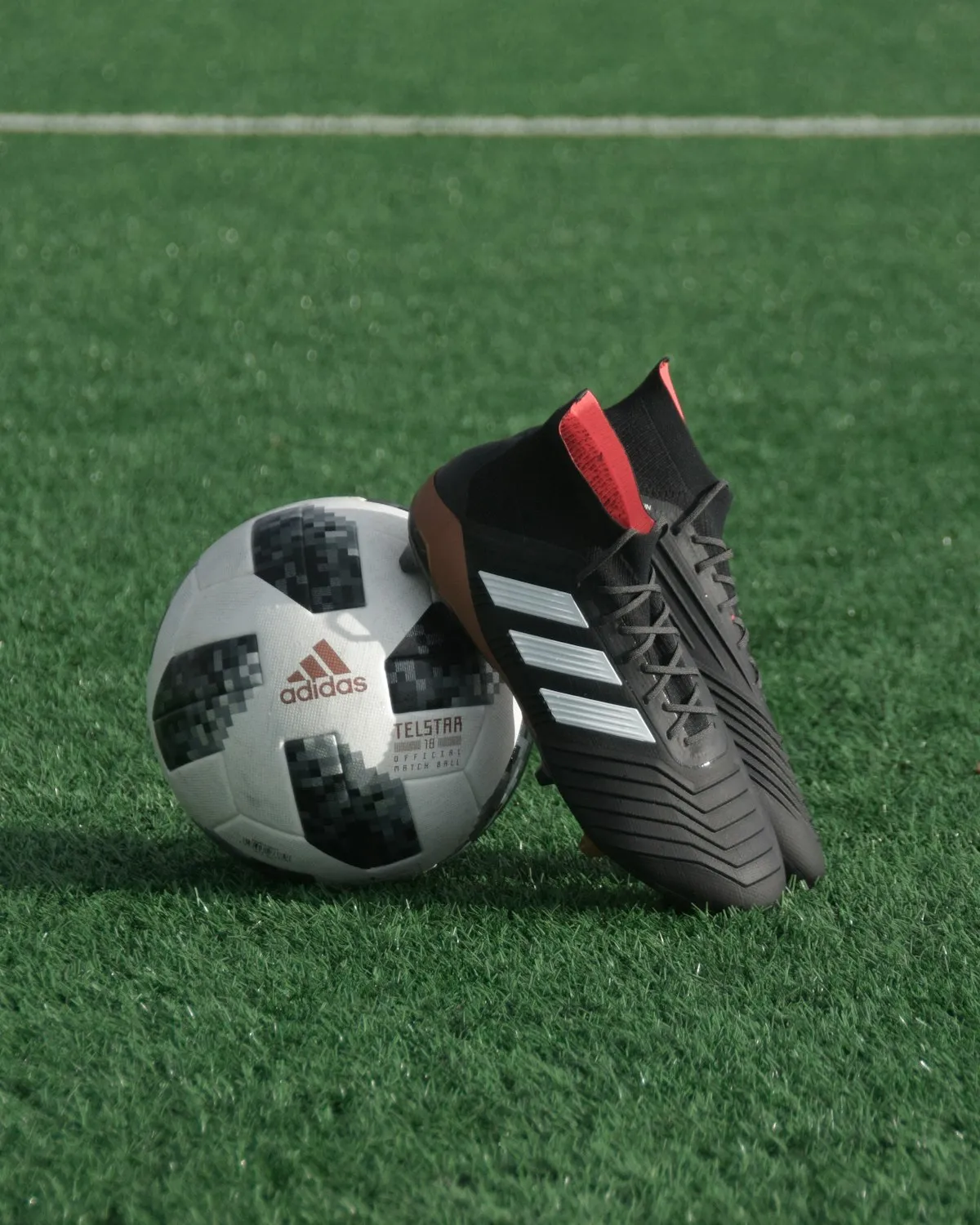
Most kids in Dubai outgrow football boots in a season. Some outgrow them in a term. The pairs they leave behind are usually fine — barely worn, structurally sound, often half the price of new. The hard part isn't finding them; it's knowing which ones are worth buying.
Here's what we check, and what we'd tell another parent to check, when looking at a second-hand pair.
The six things to look at
1. Studs first
Look at the bottom of the boot before anything else. With moulded studs (the most common type for kids) you're checking that they're all there, all the same height, and not worn down to nubs. With screw-in studs you're also checking that they thread cleanly into the boot — replacement studs that aren't the right type can damage the stud bed permanently.
A pair with one or two slightly worn studs has plenty of life left. A pair with studs worn unevenly — much more on the inside or outside than the other side — has been worn by a kid who pronates or supinates, which is fine, but you should know it before your kid wears them.
2. The toe box
Run your thumb across the front of the boot, top and bottom. You're feeling for splits in the leather or synthetic, and for places where the upper has separated from the sole. Toe-box damage is the most common reason a pair of football boots dies before its time — kids drag their toes across grass and turf, and the front of the boot takes the abuse.
Small surface scuffs are fine. A split that goes through the material is not.
3. The heel cup
Press into the back of the boot from outside, and look inside. The heel cup should hold its shape. If it's collapsed inwards, that boot is going to slip on your kid's heel for the rest of its life and there's no fixing it. Heel slip means blisters, which means a kid who hates the boots and won't wear them.
4. The insole
Pull it out. Look at the inside of the boot underneath. You're looking for: dark patches that suggest sweat damage, glue residue (suggests something's been re-stuck), or any split in the footbed. Then look at the insole itself — if it's compressed flat in places where the foot would be, the boot has been worn for a long time, even if the outside looks fine.
A worn insole is the cheapest part to replace — a new insole is AED 20–30 — but it tells you about the rest of the boot.
5. The sole flex
Hold the boot at heel and toe, and gently bend it. It should flex at the ball of the foot, not in the middle. A boot that flexes in the middle has lost its structure. A boot that won't flex at all has stiffened up — usually because it's been left in the sun or in a hot car, which is a real risk in Dubai. Either way, it's one to pass on.
6. Lace and eyelet condition
Quick check, often skipped. Frayed laces are nothing — replace them for AED 10. But check the eyelets themselves. If they're torn or stretched, the boot won't hold tension across the foot, which means a sloppy fit no matter how tightly you lace.
Three signs to walk away
- Glue you can see or smell. Some honest sellers will tell you a sole has been re-glued. Most won't. If you see glue residue around the sole-to-upper join, or smell adhesive when you put your nose to the inside of the boot, the pair has been repaired. Repaired boots fail at the repair line, usually mid-game, and the cost-per-wear stops looking attractive very fast.
- Mismatched studs. If even one stud is a different brand or shape from the others, someone's been replacing studs. That can be fine, but the replacement type has to match — different stud shapes redistribute pressure across the sole and can split the stud bed. Ask the seller. If they don't know, walk.
- A "great condition" pair where the seller can't describe the wear. Every used boot has wear. A seller who knows their boots can tell you exactly where it is — "studs even, slight crease across the right toe-box, heel cup firm." A seller who says "mint" or "barely worn" without specifics hasn't given you anything you can verify. The boots may genuinely be in great shape — but ask for the detail before you trust the claim.
What "the right size" actually means
Football boots fit tight. They're meant to. A boot that has the same gap at the toe as a school shoe will be flapping by the second match. The rule we use: a thumb-width of room at the toe when the kid is standing in the boot, fully laced. Any more than that and it's too big. Any less and you'll be back here in three weeks because they've outgrown it.
Sizing up "to grow into" is the most expensive false economy in kids' football boots. Better to buy a pair that fits now, second-hand, for half the price — and replace it in six months with another pair that fits then.
That, more or less, is the whole reason KISH exists.
— The KISH team