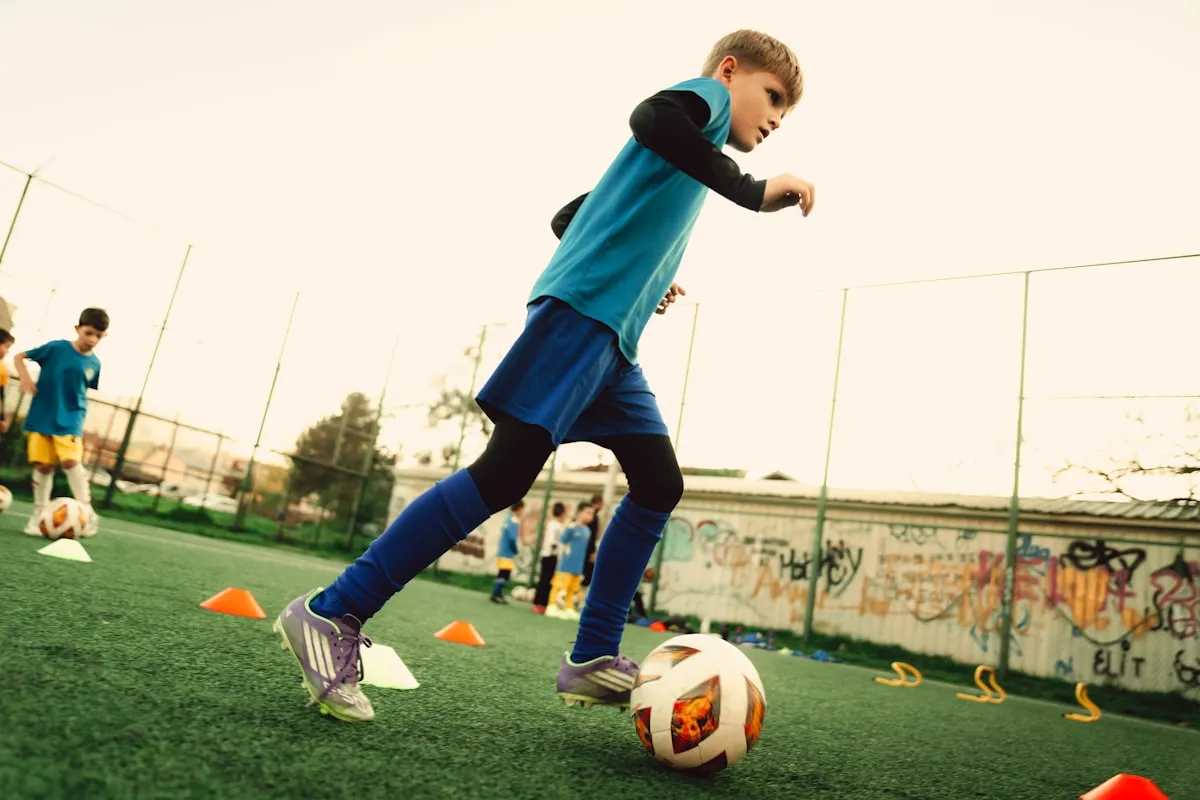
Dubai's youth sport calendar runs year-round, but the main competitive seasons — football, rugby, athletics, running clubs — are clustered between October and March. Technically the cooler months, yet pitchside temperatures at a 3pm kick-off in October can still hit 34°C. Even a January morning fixture at 8am carries humidity that adult players notice and young players feel acutely.
The physiology matters here. Youth players sweat more per kilogram of body weight than adults, regulate heat less efficiently, and are less likely to recognise the early signs of dehydration themselves. That's your job as a parent.
This guide covers the essentials: what to feed and when, how much fluid is actually needed, and how to help your child recover properly — whether they're six years old at their first mini-festival or fifteen and competing hard through a full league season. The principles apply across all youth sports.
Before the Match: Build the Tank
The goal of pre-match nutrition is straightforward: arrive with enough fuel to perform, without anything sitting heavy in the stomach.
For a morning start, aim to have your child eat 1.5–2 hours before they play. A light, carbohydrate-forward meal works well — porridge with banana, toast with peanut butter, or a simple egg wrap. Avoid high-fat or high-fibre foods close to kick-off or race time; they slow digestion and can cause discomfort during physical activity.
For a late-afternoon fixture (common at Dubai sports clubs), lunch is the key meal. This should be a proper balanced plate — rice or pasta, a lean protein like chicken or eggs, and vegetables. A small snack an hour or so before the start (a banana, a handful of dates, a plain cereal bar) tops up glycogen stores without overloading the gut.
Dates are genuinely useful here. They're available everywhere in the UAE, they're a fast-releasing carbohydrate, and most kids will eat them without complaint. Two or three medjool dates thirty to forty-five minutes before activity is a simple, practical option that needs no preparation.
Hydration before the match is often overlooked. Encourage your child to drink consistently through the morning or day leading up to their start — not to chug a large bottle ten minutes before the whistle goes. A practical check: urine should be pale yellow, not dark. If it's dark, they're already behind.
During the Match: Keep the Levels Up
The interval — half-time, a break between events, a rest between heats — is your main intervention point. Most youth fixtures are short enough that in-play eating isn't relevant, but fluid always is.
Water is sufficient for most youth matches and events. Sports drinks containing electrolytes become more relevant for older players and athletes (12+) in longer or more intense sessions, or when conditions are particularly hot. If you do use a sports drink, choose one that's lower in sugar — many commercial options aimed at kids are unnecessarily sweet. Coconut water is a reasonable natural alternative and is widely available in UAE supermarkets including Carrefour and Spinneys.
At the break, make sure your child actually drinks — not just holds the bottle. A few slices of orange or a piece of banana can help maintain blood sugar across longer events, but for most youth fixtures, fluid is the priority.
Watch for signs of heat stress: excessive fatigue, headache, stopping without apparent reason, or confusion. These are not normal tiredness. If you see them, remove your child from activity immediately, move to shade, and provide fluid. Most Dubai clubs and events have medical support on site — use it.
After the Match: Repair and Rehydrate
Recovery nutrition has a short window. In the 30–45 minutes after the final whistle or finish line, the body is primed to absorb carbohydrates and protein efficiently. A post-match snack during this window makes a genuine difference to how your child feels the next day — particularly if they compete again within 24–48 hours in a tournament or multi-event format.
Practical options that travel well to a pitch or track: a small chicken wrap, a tub of Greek yoghurt with fruit, a cheese sandwich, or a protein-containing smoothie in a flask. The combination of carbohydrate (to replenish glycogen) and protein (to begin muscle repair) is what you're after — neither alone is as effective.
For rehydration, water remains the foundation. Encourage steady drinking for the hour after the event. If your child has sweated heavily, a small salty snack (crackers, a handful of pretzels) alongside their fluid helps replace sodium lost through sweat and supports fluid retention.
The Practical Summary
If you take nothing else from this, take these four points:
- Eat 1.5–2 hours before the start, prioritising carbohydrates with some protein. Avoid heavy, fatty meals.
- Hydrate consistently through the day — not just at the venue. Pale urine is the target.
- At the break, drink. Water is enough for most youth activity. Have it ready and cold.
- Within 45 minutes of finishing, give them something with both carbs and protein. Don't wait until you're home.
None of this requires special products or expensive supplements. Good basics, applied consistently, are what actually move the needle — especially in a climate that puts extra demand on young bodies.
— The KISH team